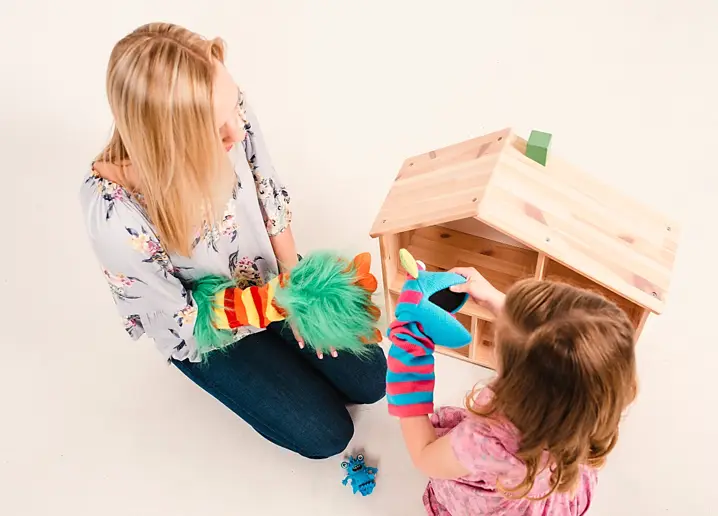

Play is a fundamental aspect of childhood. An important aspect of imaginative play is that it provides children with the opportunity to express themselves in their own unique way, establish relationships with other children, and to develop their social skills. In contrast to adults, children have difficulty communicating verbally their thoughts, frustrations, fears, and questions. Typically, play therapy involves using toys, games, and creative activities to help children express their emotions and experiences in a safe environment. Through play, children are able to express themselves freely and effortlessly, which helps them develop their imaginations. They are also provided with opportunities to view everyday life from a wide variety of perspectives. Play is an effective means of exploring and familiarizing with both the inside and outside environment. This is a fundamental part of a child’s development just as a mother’s warmth is vital.
In some cases, it can be difficult to differentiate between a child being “just a child” and having “just a bad day” and when their behavior is concerning enough to warrant professional assistance. The following are a few things to consider when considering play therapy for your child:

If your child seems to be more anxious than usual, unable to sleep through the night, or throwing tantrums more than usual, it may indicate that your child has been provoked by an event. We recommend addressing issues early and before they become a recurring pattern, therefore please do not hesitate to speak with our psychotherapist.

If your family has experienced any changes such as a death, divorce, or the merging of families, or your child is under significant pressure at school, then consider play therapy to help your child deal with her fears. As children's natural language is play, our psychotherapist uses this approach to help them express themselves and process their hard feelings.

Depression may be evident in a child who once enjoyed many activities, but no longer shows any interest or joy for participating in them anymore. Through play therapy, our psychotherapist can explore the changes in your child, helping to reinvigorate their spirit.

Research shows that if your child is taking a new medication to help ease symptoms (e.g., ADHD), you can enhance their treatment with play therapy to achieve faster results. Our play therapist will collaborate with your doctor about your child's progress following the implementation of new medication and new coping skills.

Children possess a remarkable capacity to overcome obstacles. However, they are not immune to deep emotional trauma. If your child has experienced trauma, it may be in their highest interest to receive play therapy. Through play, our psychotherapists help children explore and process their feelings, which facilitates healing and coping. Our trained therapists facilitate these sessions to ensure the child develops emotional insight and resilience.

If your child wets the bed after not having any problems for a long time, she may be feeling powerless, out of control or overwhelmed by all that is happening in her life. The regressive nature of your child's behaviour may have caused your child to lose the confidence that your child once displayed. In play therapy, our psychotherapist helps your child feel empowered by letting them direct the play and take the lead, allowing them to regain their self-confidence.

Clinginess may be a sign of anxiety. Whenever a child lacks confidence and resilience to deal with potential harms, they become clingy. Through play therapy, our psychotherapist will help your child build their self-confidence - the feeling of 'I can do this!' and confidently announce, 'I will figure it out!' Having this kind of attitude is crucial to developing resiliency and confidence.

Finally, if you have exhausted all of your options to help your child, but are still experiencing difficulties, it may be beneficial to consult with our play psychotherapist. This will enable you to find support for everyone. In addition, our play psychotherapist can provide valuable insights and strategies tailored to your child's needs. This can reduce stress and improve communication for the entire family and foster a more harmonious home environment and strengthen family bonds. Ultimately, everyone benefits from a more cohesive and understanding approach to addressing your child's challenges.

The use of our Strong for Life play therapy treatment plans has been found to be effective for treating children experiencing a wide range of social, emotional, behavioral, and learning problems, including: children with life-stress-related problems, such as divorce, death, relocation, hospitalization, chronic illness, difficulties assimilating stressful events, physical and sexual abuse, domestic violence, and natural disasters.
In addition, more than 100 research studies have demonstrated play therapy’s considerable effectiveness, demonstrating its universal effectiveness across a wide range of age groups, genders, and conditions. Moreover, parents’ active involvement was found to have the greatest impact on treatment effectiveness.
Our Strong for Life Play therapy helps children:
During play therapy, toys serve as a child’s language and play as a means of expressing themselves. When children have emotional or social skills deficits, our therapists help them learn more adaptive behaviors through play. As a result of the positive relationship developed between the therapist and child during play therapy sessions, children are provided with the corrective emotional experience they need to heal. Moreover, play therapy is beneficial to a child’s cognitive development and can assist the child in resolving inner conflicts or disordered thinking.
Here at Strong for Life, we recognize that each child-client is unique.
Play therapy allows our professional psychotherapist, Juanitte Pieterse, to assess and understand children’s play. As a play therapist, she helps children cope with difficult emotions, find healthier solutions to problems, and change how they think, feel, and resolve their concerns. In play therapy, even the most challenging issues can be confronted and lasting resolutions can be discovered, rehearsed, mastered, and adapted into lifelong behavior patterns.
Typically, a play therapy session lasts between 30 and 50 minutes, with sessions being held on a weekly basis. Typically, for a child to be able to resolve their issues, 20 sessions of play therapy are required. Obviously, some children will progress far more quickly than others, while others will have more severe or longer-term difficulties.
Children’s healing processes are greatly influenced by their families. Families and children are always interconnected in terms of their problems. For example, children may develop problems as a means of communicating that something is amiss in the home. In some cases, the child’s problems cause distress to the entire family due to the disruption they cause. However, when children and families work together, healing occurs more quickly.
Our play therapist will determine how and when to involve some or all members of the family in the play therapy sessions. She will work closely with the child’s caregivers to develop a plan for dealing with problems as they arise and monitor the treatment’s progress. Alternately, caregivers or even the entire family may benefit from direct involvement in the treatment by changing how they interact with the child at home. Family members typically play a significant role in the healing process of children, regardless of their level of involvement.
Understanding your child’s thoughts, feelings, behaviors, and needs is essential to their happiness and fulfillment. You can help your child live the life they were meant to live right now by clicking the button below.

Through our integrated approach to play therapy, we can help you gain insight into your child's thoughts, feelings, and behaviors. Taking this approach helps you better understand your child and help them make positive changes.

Through play therapy, your child learns effective ways to deal with difficulties. Play therapy helps your child develop their mental health and emotional management skills. Over time, these skills can lead to improved academic performance and stronger social relationships.

In play therapy, we provide children with a warm, supportive environment. With empathy and professionalism, our therapists will guide you through each step, ensuring your child and you feel comfortable and supported throughout the entire process.

Children who undergo play therapy often experience improved emotional regulation and increased self-esteem. As part of our play therapy, your child will learn how to express their feelings in a healthy way, leading to happier relationships at home and at school. Ultimately, this foundation can set them up for a more resilient and emotionally healthy adulthood.